

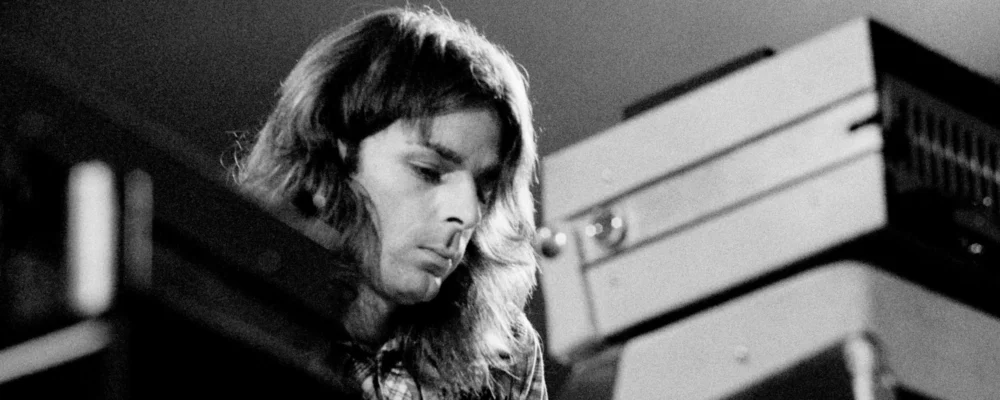
To the global audience of the late 1970s, Pink Floyd represented the pinnacle of progressive rock, an unstoppable cultural juggernaut that had redefined the parameters of the recording industry with albums like The Dark Side of the Moon and Wish You Were Here. Behind the meticulously crafted sonic landscapes and the grand spectacle of their live performances, however, the band was navigating a period of unprecedented internal volatility and financial peril. This friction culminated in 1979 with the quiet departure of founding keyboardist Richard Wright, an event so skillfully managed by the band’s inner circle that the majority of their global fanbase remained unaware of the fracture for years. The circumstances surrounding Wright’s exit during the recording of The Wall offer a profound insight into the power dynamics, creative exhaustion, and economic pressures that eventually dismantled one of the most successful musical partnerships in history.
The Financial Catalyst and the Norton Warburg Crisis
The internal collapse of Pink Floyd cannot be understood without examining the dire financial straits the group faced in 1978. Despite having sold tens of millions of records, the band found themselves on the brink of bankruptcy due to the collapse of the Norton Warburg Group, their financial management firm. The firm had funneled the band’s earnings into high-risk, unsuccessful venture capital schemes, leaving the members with a potential tax liability that threatened their personal fortunes.
To mitigate this disaster, the band was forced into a period of tax exile, relocating to France to record their next project. The stakes were extraordinarily high; they required a massive commercial hit to achieve financial solvency. This pressure fell largely on the shoulders of bassist and primary songwriter Roger Waters, whose burgeoning "The Wall" concept became the band’s lifeline. The transition from a collaborative democratic unit to a project dominated by Waters’ singular vision created a hierarchy that marginalized other members, specifically Richard Wright.
The Erosion of Collaborative Synergy
Richard Wright had been fundamental to the "Floydian" sound, providing the atmospheric textures and jazz-inflected harmonies that anchored the band’s psychedelic and progressive eras. His contributions to Echoes and Shine On You Crazy Diamond are widely cited by musicologists as the emotional core of those works. However, by the late 1970s, Wright was struggling with personal issues, including a failing marriage and a debilitating bout of depression.
As sessions for The Wall began at Super Bear Studios in France, the creative environment turned toxic. Waters, increasingly perfectionist and authoritarian, grew frustrated with what he perceived as Wright’s lack of productivity. While Waters and guitarist David Gilmour were logging long hours, Wright appeared to be struggling to provide the specific keyboard arrangements Waters demanded. The situation was further complicated by the arrival of producer Bob Ezrin. While Ezrin brought necessary discipline to the sprawling project, his presence further diluted Wright’s influence, as Ezrin himself took over many of the keyboard duties and orchestral arrangements.
The Ultimatum: The Firing of Richard Wright
The breaking point occurred in the summer of 1979. Waters had requested that Wright return early from a family holiday to assist with keyboard overdubs in Los Angeles, where production had moved. Wright, citing the need for personal time and a desire to see his children, refused. This defiance triggered a definitive response from Waters.
Roger Waters issued an ultimatum to the band’s manager, Steve O’Rourke: either Wright must leave the band at the conclusion of the album sessions, or Waters would withdraw the "The Wall" project entirely. Given the band’s financial desperation, the prospect of losing the album was unthinkable. Wright was presented with the choice of being fired immediately or agreeing to resign quietly after the album’s completion. To avoid a public scandal that might damage the album’s commercial prospects, Wright agreed to leave but remained as a salaried session musician to complete the recording and perform on the subsequent tour.
The Paradox of the 1980-1981 Wall Tour
The aftermath of Wright’s departure created one of the most ironic scenarios in rock history. When Pink Floyd embarked on the limited, highly expensive tour for The Wall in 1980 and 1981, the production costs were astronomical. The show involved the construction and destruction of a 40-foot-high wall of cardboard bricks, giant inflatable puppets, and complex projection systems.
Because the tour’s overhead exceeded its revenue, the three official members of Pink Floyd—Waters, Gilmour, and Nick Mason—personally absorbed the massive financial losses. However, because Richard Wright had been demoted to a contract player, he was paid a fixed weekly salary. Consequently, Wright was the only member of Pink Floyd to earn a profit from the legendary Wall tour, while the "owners" of the band lost hundreds of thousands of dollars.
Chronology of the Fracture and Reintegration
To understand the long-term implications of this event, a timeline of Wright’s status within the band is essential:
- 1965: Wright co-founds Pink Floyd (then Sigma 6).
- 1973–1977: Wright’s creative peak with the band on The Dark Side of the Moon, Wish You Were Here, and Animals.
- 1978: Financial ruin via Norton Warburg; band enters tax exile in France.
- 1979 (August): Waters issues the ultimatum; Wright is officially terminated as a partner but retained as a session player.
- 1979 (November): The Wall is released; Wright is credited for playing but his status as a non-member is kept from the public.
- 1980–1981: Wright performs on The Wall tour as a salaried employee.
- 1983: The Final Cut is released; Wright is entirely absent, and the credits list only Waters, Gilmour, and Mason.
- 1985: Roger Waters officially leaves Pink Floyd, declaring the band "a spent force."
- 1987: David Gilmour and Nick Mason revive the band for A Momentary Lapse of Reason. Wright is brought back as a session musician (due to legal complexities regarding his previous exit).
- 1994: With the release of The Division Bell, Wright is officially reinstated as a full legal partner in Pink Floyd.
- 2005: The "classic" lineup, including Wright and Waters, reunites for a final performance at Live 8.
Statements and Retrospective Perspectives
In the years following the split, the principals offered differing accounts of the necessity of Wright’s removal. Roger Waters remained steadfast in his assessment, stating in various interviews that Wright was "not pulling his weight" and had become a "passenger" in the creative process. Waters argued that his responsibility was to the survival of the band and the integrity of the work, which he felt Wright was obstructing.
David Gilmour, while initially agreeing to the firing to save the project, later expressed regret over the harshness of the decision. In the 2000s, Gilmour noted that while Wright was indeed struggling during The Wall sessions, the pressure applied by Waters was counterproductive. Nick Mason, in his autobiography Inside Out, admitted that the band failed to support Wright during his period of depression, noting that the collective’s survival instinct in the face of financial ruin overrode their personal loyalty to their keyboardist.
For his part, Richard Wright remained largely stoic about the incident until the late 1980s. He later admitted that he was "frozen out" and that the atmosphere within the band had become so oppressive that he lacked the will to fight for his position at the time.
Analysis of Implications and Artistic Impact
The removal of Richard Wright had a profound impact on the final era of Pink Floyd’s "classic" period. The album that followed The Wall, 1983’s The Final Cut, is often criticized by fans and historians for its lack of musical balance. Without Wright’s lush keyboard textures and Gilmour’s usual level of input, the album felt to many like a Roger Waters solo project released under the Pink Floyd name. The "sonic space" that Wright traditionally filled was replaced by starker, more aggressive arrangements, marking a definitive end to the atmospheric sound that had defined the band’s 1970s output.
Furthermore, the secrecy surrounding Wright’s departure set a precedent for the litigious and bitter breakup of the band in the mid-1980s. The "silent farewell" of 1979 demonstrated that the internal mechanics of Pink Floyd had shifted from a brotherhood of art to a corporate entity governed by ultimatums.
Legacy and Reconciliation
The eventual return of Richard Wright for The Division Bell and the 2005 Live 8 reunion provided a sense of closure to one of rock’s most tumultuous chapters. Wright’s contributions to the band’s final studio album, The Endless River (released posthumously in 2014), served as a tribute to his integral role in the group’s identity.
The story of Wright’s 1979 departure remains a cautionary tale within the music industry regarding the intersection of creative ego, financial pressure, and mental health. While The Wall stands as a masterpiece of 20th-century rock, it also serves as the monument under which the original chemistry of Pink Floyd was buried, beginning with the quiet, unceremonious exit of the man who provided its most ethereal sounds.
