

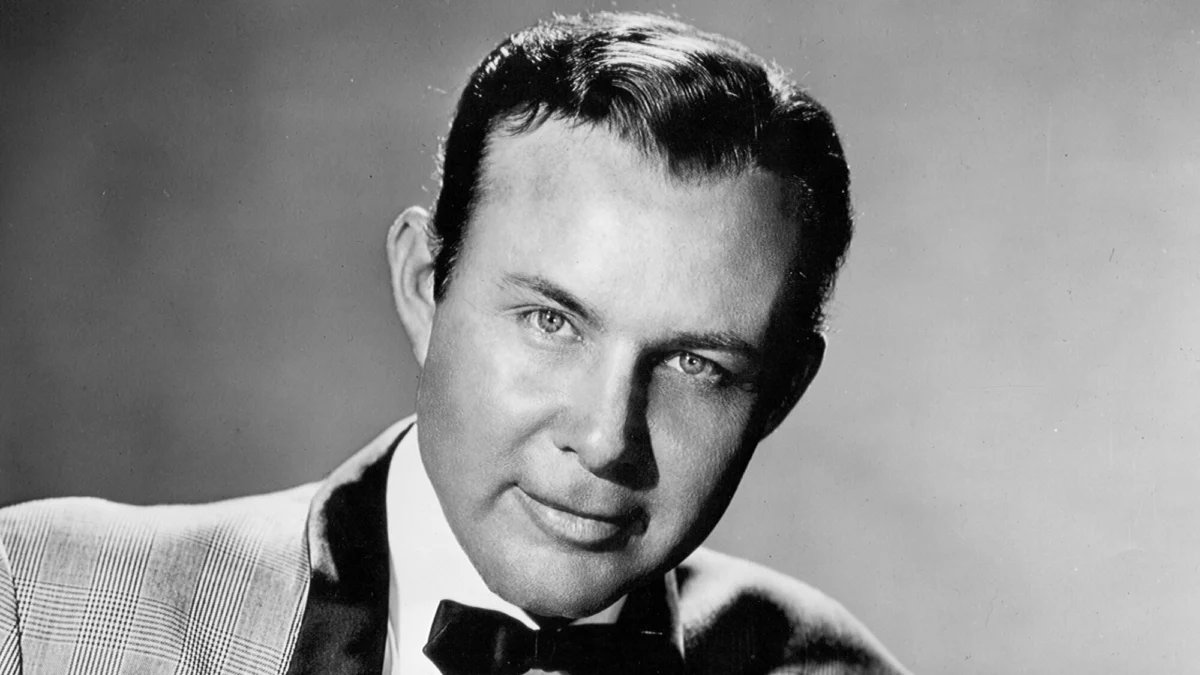
On this day, April 17, 1960, the American music landscape was firmly under the influence of Jim Reeves, who was then in the tenth week of a monumental 14-week residency at the summit of the Billboard Hot Country Songs chart with his seminal hit, "He’ll Have to Go." At that specific juncture in music history, the achievement represented the longest-running Number 1 single in the history of the consolidated country charts, a feat that not only solidified Reeves’ status as a premier stylist in the genre but also signaled a transformative era for the "Nashville Sound." The song’s reach extended far beyond the rural demographics of country music, crossing over into the mainstream pop consciousness to peak at Number 2 on the Billboard Hot 100. By the end of the year, Billboard would recognize it as the Number 2 song of 1960, trailing only Percy Faith’s "Theme from A Summer Place."
While the success of "He’ll Have to Go" served as a career-defining triumph for the man affectionately known as "Gentleman Jim," it also carried a poignant historical weight. It would ultimately stand as the final single to reach the top of the charts during Reeves’ lifetime. His prolific career was tragically cut short on July 31, 1964, when he perished in a private plane crash near Nashville, Tennessee. The enduring popularity of the track, however, serves as a testament to Reeves’ unerring musical instincts and the sophisticated production techniques that helped redefine country music for a global audience.
The Genesis and Artistic Intuition Behind a Classic
The origins of "He’ll Have to Go" are rooted in the collaborative songwriting of the husband-and-wife duo Joe and Audrey Allison. The inspiration for the lyrics reportedly came from a mundane but relatable experience: Joe Allison was having difficulty hearing his wife over the telephone and told her to "put her sweet lips a little closer to the phone." This simple directive evolved into a narrative of romantic tension, jealousy, and a long-distance ultimatum.
Despite the song’s eventual status as a masterpiece of the genre, its path to Jim Reeves was not immediate. The first artist to record the track was Billy Brown, a rockabilly singer signed to Columbia Records. Brown’s version, released in 1959, failed to make a significant impact on the charts. When Reeves first heard the song, he was immediately struck by its potential, expressing an urgent desire to record it himself. However, his enthusiasm was met with skepticism from industry insiders and advisors at RCA Victor, who suggested that he wait to see if Brown’s version would eventually find its footing.
Reeves remained steadfast in his conviction. He is famously quoted as saying, "This is going to be the big one. No matter what I’ve done in the past, or ever will do, ‘He’ll Have to Go’ is going to be the one that will live on." His intuition proved to be one of the most accurate self-assessments in the history of the recording industry. Reeves recognized that the song required a specific vocal intimacy—a departure from the high-lonesome sound of traditional country—to truly resonate with listeners.
The Production of the Nashville Sound
The recording of "He’ll Have to Go" took place at the legendary RCA Studio B in Nashville, with the equally legendary Chet Atkins serving as producer. This session was a pivotal moment in the development of the "Nashville Sound," a subgenre characterized by smooth strings, background vocals, and a "crooning" vocal style that aimed to make country music more palatable to pop audiences who were increasingly turning toward rock and roll.
Atkins and Reeves stripped away the traditional fiddles and steel guitars that had defined the honky-tonk era. Instead, they utilized a lush arrangement featuring Floyd Cramer’s distinctive "slip-note" piano style and a rhythmic, vibraphone-heavy backdrop. Reeves’ vocal performance was a masterclass in subtlety. By using a "close-mic" technique, he allowed his rich baritone to convey a sense of whispered confidentiality, making every listener feel as though they were the one on the other end of the telephone line.
Interestingly, the commercial release of the song was almost hindered by a lack of faith from the label’s marketing department. RCA Victor initially relegated "He’ll Have to Go" to the B-side of the single "In a Mansion Stands My Love." It was only after disc jockeys across the country began ignoring the A-side in favor of the B-side that the label realized the magnitude of the hit they had on their hands. The public’s preference was overwhelming, and the record was quickly flipped, propelling Reeves to the top of the charts.
Statistical Context and Billboard Chart Evolution
To understand the magnitude of Reeves’ 14-week run, one must look at the state of the Billboard charts in the late 1950s. Prior to 1958, Billboard tracked country music popularity through several disparate charts, including "Most Played by Jockeys," "Best Sellers in Stores," and "Most Played in Juke Boxes." In October 1958, these were consolidated into a single "Hot C&W Sides" chart, which debuted in early 1959.
The first artist to top this new, unified chart was Ray Price with "City Lights." Throughout 1959, the chart saw significant dominance from crossover hits. Johnny Horton’s "The Battle of New Orleans" and The Browns’ "The Three Bells" both enjoyed 10-week runs at Number 1. However, when "He’ll Have to Go" hit the top spot in early 1960, it shattered those fledgling records.
Reeves’ 14-week streak remained the gold standard for several years. It was briefly tied by Hank Locklin later in 1960 with "Please Help Me, I’m Falling," but it wasn’t surpassed until 1963. On October 19 of that year, Buck Owens began a 16-week reign with "Love’s Gonna Live Here," a record that would remain unbeaten for nearly half a century until Florida Georgia Line’s "Cruise" broke it in the digital era. The longevity of Reeves’ record during the physical sales era remains a testament to the song’s universal appeal.
Chronology of the 1960 Chart Performance
The timeline of the song’s ascent provides a clear picture of its gradual but unstoppable momentum:
- Late 1959: Reeves records the song at RCA Studio B.
- December 1959: The single is released with "He’ll Have to Go" as the B-side.
- January 1960: Radio DJs begin pivoting to the B-side; the song enters the Hot C&W Sides chart.
- February 8, 1960: The song reaches Number 1 on the country chart, beginning its 14-week tenure.
- March 1960: The song reaches its peak of Number 2 on the Billboard Hot 100, held back from the top spot only by Percy Faith.
- April 17, 1960: Reeves marks his 10th week at the top, officially surpassing the 1959 records held by Horton and The Browns.
- May 1960: The song finally relinquishes the top spot, but remains a staple of radio airplay for the remainder of the year.
Broader Impact and Posthumous Legacy
The success of "He’ll Have to Go" did more than just sell records; it changed the trajectory of Jim Reeves’ career and the perception of country music abroad. Reeves became one of the first country artists to achieve massive international stardom, particularly in South Africa, Ireland, and the United Kingdom. His smooth, "countrypolitan" style bridged cultural gaps, making him a global ambassador for the Nashville recording industry.
Tragically, the height of his influence was cut short. On July 31, 1964, Reeves was piloting a Beechcraft Debonair aircraft from Batesville, Arkansas, to Nashville when he encountered a severe thunderstorm. The plane crashed in a wooded area in Brentwood, Tennessee, killing Reeves and his manager, Dean Manuel. The search for the wreckage lasted two days and drew national attention, with fellow country stars like Marty Robbins and Ernest Tubb participating in the search efforts.
In a phenomenon rarely seen in the music industry, Reeves’ popularity actually increased following his death. His widow, Mary Reeves, meticulously managed his unreleased recordings, leading to a string of posthumous hits that lasted well into the 1970s and 1980s. However, none of these later successes could quite eclipse the cultural footprint of "He’ll Have to Go."
Analytical Implications for the Music Industry
From a modern analytical perspective, "He’ll Have to Go" represents a masterclass in "crossover" marketing. It proved that country music could maintain its soul while adopting the high production values of the pop world. The song’s success encouraged RCA and other labels to invest more heavily in the Nashville infrastructure, leading to the creation of Music Row as a global powerhouse.
Furthermore, the song’s history as a B-side highlights the historical importance of radio disc jockeys as tastemakers. In an era before algorithmic playlists, the "gatekeepers" of the airwaves had the power to override label decisions and elevate a song based on listener feedback and professional intuition.
Today, "He’ll Have to Go" is preserved in the Library of Congress’s National Recording Registry, cited for its cultural, historical, and aesthetic significance. As we look back on April 17, 1960, we see more than just a date on a calendar; we see the moment when Jim Reeves transitioned from a country star to a permanent fixture of the American musical canon. His 14-week run was not just a statistical anomaly, but a definitive statement on the enduring power of a perfectly crafted song and a voice that knew exactly how to deliver it.
