

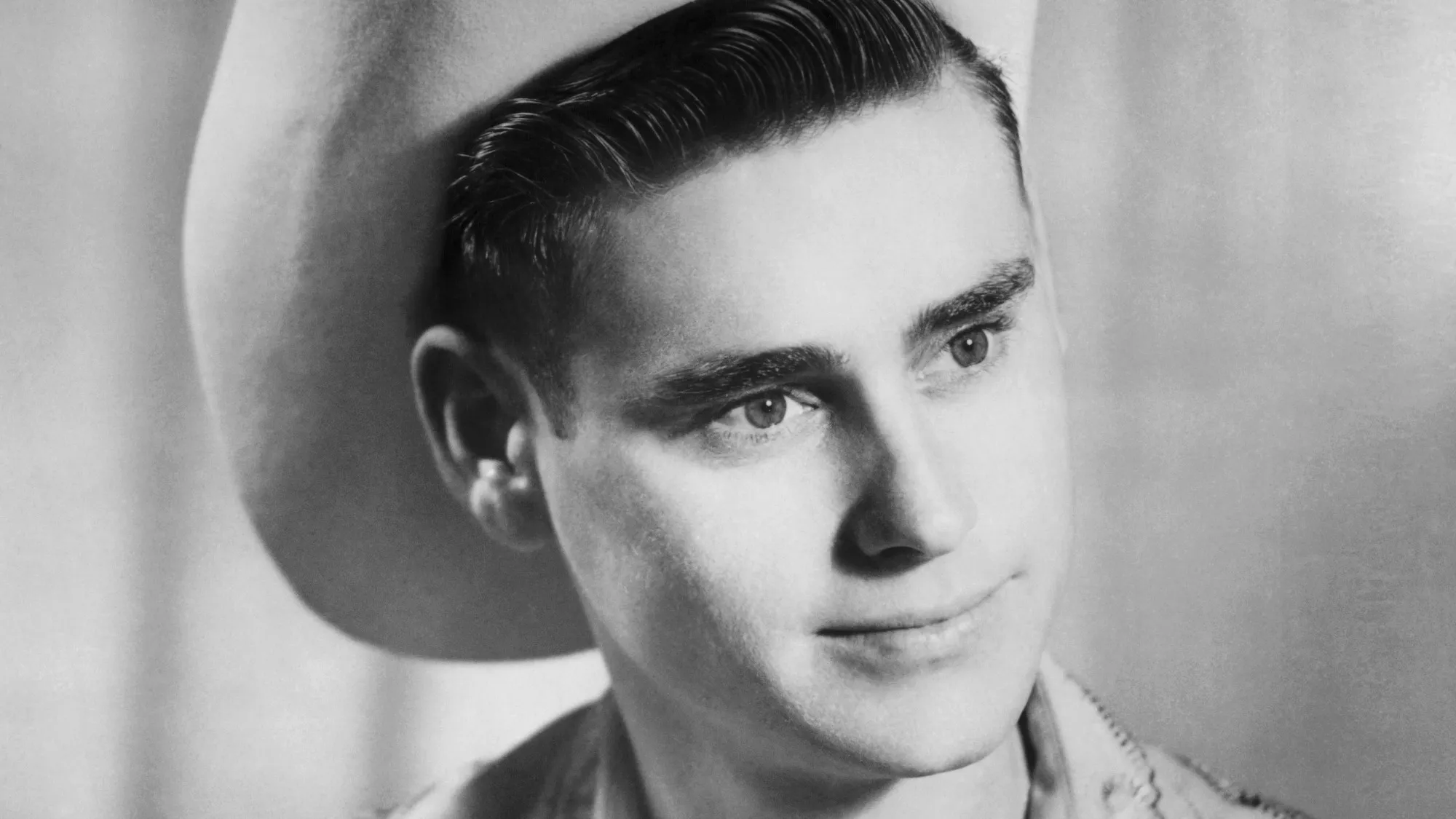
In the annals of American music history, certain moments serve as definitive pivot points that alter the trajectory of a genre. September 1955 stands as one such milestone, marking the release of “Why Baby Why,” the single that introduced the world to the vocal prowess and songwriting capabilities of George Jones. While Jones would eventually be canonized as perhaps the greatest traditional country vocalist of all time, the release of this track represented his first significant commercial breakthrough, peaking at No. 4 on the Billboard country charts. The song did more than just establish Jones as a viable recording artist; it became a foundational text of the honky-tonk subgenre, illustrating the complex interplay between independent labels, major distributors, and the burgeoning "cover" culture of the 1950s.
The Genesis of a Honky-Tonk Standard
Before "Why Baby Why" reached the airwaves, George Jones was a struggling artist signed to Starday Records, a small, independent label based in Texas. Jones had already released five singles, yet none had managed to penetrate the national consciousness. During this period, the production of country music was often a grassroots endeavor. Jones’s early recordings were frequently captured in makeshift environments, including the living rooms of producers and small-town radio stations. These recordings, while possessing a raw energy, lacked the sonic clarity required for national radio syndication.
The creation of “Why Baby Why” marked a departure from these amateur beginnings. Co-written by Jones and Darrell Edwards, the song tapped into the quintessential themes of the era: heartbreak, confusion, and the rhythmic, driving pulse of the Texas honky-tonk scene. Unlike his previous efforts, this session was conducted in a professional studio environment with seasoned session musicians. This shift in production quality was immediately evident in the final master, which featured a crispness and a driving fiddle-and-steel-guitar arrangement that complemented Jones’s unique phrasing and percussive vocal delivery.
A Chronology of Success and Competition
The release of "Why Baby Why" in September 1955 triggered a rapid series of events that would define Jones’s early career. The song first found a foothold in the Houston, Texas, market. Local airplay on stations such as KIKK proved instrumental; the regional demand was so fervent that it necessitated a wider distribution strategy. By late 1955, the track had successfully transitioned from a regional curiosity to a national hit, eventually climbing to the No. 4 position on the country charts.
However, the success of the song also attracted the attention of major industry players. In the mid-1950s, it was common practice for major labels to "cover" hits produced by independent labels to capitalize on established momentum. Decca Records, a dominant force in the industry, recognized the potential of "Why Baby Why" and quickly arranged a duet version featuring established stars Red Sovine and Webb Pierce.
Released in December 1955, the Sovine-Pierce rendition benefited from Decca’s superior distribution network and the existing fame of the performers. Consequently, their version ascended to the No. 1 spot on the charts in early 1956. While this cover arguably hindered the chart ceiling of Jones’s original version, it simultaneously cemented the song’s status as a standard. The industry saw a third major entry later that year when Hank Locklin released his own version, which reached No. 9, further proving the composition’s universal appeal.
Technical Analysis and Songwriting Prowess
While George Jones is frequently celebrated for his interpretive vocal abilities—specifically his use of melisma and his ability to convey profound sorrow—"Why Baby Why" highlights his often-overlooked talent as a songwriter. The collaboration with Darrell Edwards resulted in a lyric that was both conversational and rhythmically sophisticated.
Jones’s early songwriting output was prolific and commercially successful. Beyond "Why Baby Why," he was responsible for the 1961 No. 1 hit “Tender Years,” a song that showcased his transition toward the "countrypolitan" and ballad-heavy style that would dominate his later career. Furthermore, his co-writing credit on “Tall, Tall Trees” with Roger Miller demonstrated his versatility. Though Jones’s own version of the song was not a massive hit at the time, the strength of the composition was validated decades later when Alan Jackson took the song to the top of the charts in the 1990s.
From a technical standpoint, the 1955 recording of "Why Baby Why" utilized a "double-tracked" vocal technique that was popular in the mid-50s. This gave Jones’s voice a fuller, more resonant quality that stood out against the thin arrangements common in early 1950s country. The interplay between the upright bass and the snapping snare drum provided a "shuffle" beat that became a signature of the "Starday sound," influencing the production styles of subsequent Nashville recordings.
Impact on the Industry and Multi-Generational Longevity
The legacy of "Why Baby Why" extends far beyond its initial chart run. The song served as a blueprint for the "hard country" revivalists of subsequent decades. Its influence can be traced through various reinterpretations that spanned different subgenres of country and rock.
In 1983, the legendary Charley Pride recorded a version of the song that returned it to the No. 1 position, nearly 30 years after its debut. Pride’s success with the track underscored the timeless nature of the melody and the relatability of its lyrics. The song has also been interpreted by a diverse array of artists, including:
- Waylon Jennings: Who infused the track with the "Outlaw Country" grit of the 1970s.
- Patty Loveless: Whose neo-traditionalist approach in the 1990s brought the song to a new generation of listeners.
- Roger McGuinn: The Byrds frontman who bridged the gap between folk-rock and traditional country.
- Palomino Road: Whose 1990s rendition highlighted the song’s enduring viability in the contemporary country market.
Broader Implications for George Jones’s Career
For George Jones, "Why Baby Why" was the catalyst that allowed him to escape the limitations of the regional Texas circuit. The success of the single provided him with the leverage to secure better recording contracts and higher-profile touring engagements. It also established his "brand" as an artist who could deliver both up-tempo honky-tonk numbers and deeply felt ballads.
The song’s trajectory also serves as a case study in the economics of the 1950s music business. The fact that a major label like Decca could "steal" the momentum of an independent release by Starday highlighted the precarious position of small labels. However, this competition ultimately benefitted Jones by ensuring his composition received maximum exposure. The royalties from the various cover versions provided a financial cushion that allowed Jones to continue refining his craft during the late 1950s.
Conclusion: A Cornerstone of the Country Canon
As country music evolved from the raw, acoustic-driven sounds of the post-war era into the polished, globally distributed industry of the late 20th century, "Why Baby Why" remained a constant point of reference. It represents the moment when George Jones found his voice—a voice that would go on to define the emotional depth of the genre for over half a century.
The song stands as a testament to the importance of the independent label system in discovering raw talent and the enduring power of high-quality songwriting. While Jones would go on to record more famous tracks, such as "He Stopped Loving Her Today," it was the driving rhythm and desperate plea of "Why Baby Why" that first signaled the arrival of a titan. Seven decades after its release, the track remains a staple of classic country radio and a mandatory study for any aspiring vocalist or songwriter in the genre. The success of "Why Baby Why" was not merely a personal victory for George Jones; it was a foundational brick in the architecture of modern country music.
